 Hide message
We are proud to be implementing our 2026-2028 Innovate Reconciliation Action Plan
Our vision for reconciliation is to work together toward a future where First Nations people’s rights, cultures and contributions are fully recognised and celebrated. We believe reconciliation is not just a responsibility, but a shared opportunity to better understand our story and create a mutually beneficial future.
Traditional Owners and First Nations people have made clear what they need from energy companies’ operating on Country. Genuine opportunities, not token gestures. Respect for cultural knowledge that shows up in our actions, not just our words. This Reconciliation Action Plan is our response to that challenge.
We operate from Naarm/Melbourne and Djilang, with major operations on the lands of the Bunurong, Wiradjuri, Dharawal, Ngadjuri and Gunaikurnai peoples. Our reconciliation journey starts with the relationships we’ve built with Traditional Owner groups in these places. These partnerships have taught us that rehabilitation and renewable energy work must be guided by cultural knowledge. Understanding Country comes first. Then we work together on what comes next.
Leading and accelerating Australia’s clean energy transition for all is our purpose. Reconciliation must be at the heart of how that transition happens. What does that mean in practice?
- Relationships: Clean energy projects are shaped through genuine partnership with Traditional Owner groups. From the earliest conversations through to delivery of Capacity Investment Scheme commitments, decisions are made together. Both parties bring expertise. Both parties benefit.
- Respect: First Nations people see EnergyAustralia as a place they want to work. When they join, they find clear career pathways and workplaces that feel safe and celebrate culture. Representation grows because people want to stay and grow with us.
- Opportunities: First Nations businesses have a reliable customer and partner. Procurement opens doors rather than creates barriers. Economic benefits are shared with communities where projects happen.
Read additional stories from our people on how we are progressing reconciliation:
Increasing understanding and value through cultural learning
“The more I learn, the more I realise how much there is to understand.” – Robyn Buchanan, Jeeralang Power Station
We are proud to have made Cultural eLearning mandatory as part of our learning plans. Delivered in partnership with First Nations training company, Corporate Culcha, the course covers important topics such as First Nations cultures and histories as well as the impact of unconscious bias and racism in the workplace.
Robyn Buchanan, Team Coordinator at Jeeralang Power Station has built on the strong foundations of the Cultural eLearning to create learning experiences beyond the computer.
“I found the online learning a great starting point, but the best way we can support our team’s continued learning is to offer opportunities that connect with their interests. We thought a session on cultural burning would be interesting – but it was so much more than we expected,” Robyn shared.
During the session, Brandon Hood and Greg Harry from B & G Cultural and Fire Awareness Specialists shared how First Nations people have shaped Australia through tradition, resilience, and fire. Brandon, a proud Krauatungalang man of the Kurnai Tribe, and Greg, who brings over 35 years of knowledge-sharing in cultural burning, started with truth-telling.
“Brandon and Greg created a safe space to ask questions,” Robyn said. “Our people appreciated the opportunity to ask whatever was on their mind and get an honest answer. It was done in a respectful way for all of us to grow our understanding.”
The team then moved outdoors for a live demonstration of cool burning techniques. “It was a powerful reminder that Australia’s First Peoples have been using fire for over 60,000 years to manage Country. They have learnt so much that we can benefit from.”
Robyn knows that it will be a session that everyone who attended will remember. “One person told me it was the best Indigenous awareness session they’ve ever attended. It reinforced the idea that through these experiences not only are we learning, but we’re gaining a greater appreciation of First Nations knowledge.
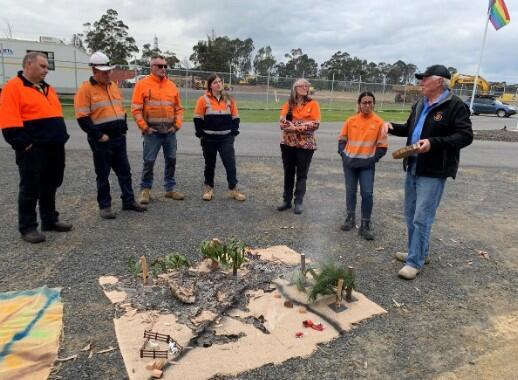
Image: Jeeralang Power Station receive a live demonstration of First Nations fire burning and cooling techniques
Putting Purpose into Procurement: Growing First Nations Supplier Engagement
“Working with First Nations-owned suppliers is a powerful way to support economic equality and reconciliation,” – Ashley Rehburg, Procurement Specialist
When EnergyAustralia sought a new scaffolding provider for Tallawarra Power Station near Wollongong, KJ Industrial Scaffolding quickly stood out. A Supply Nation Certified business, KJ is proudly Aboriginal-owned and meets rigorous standards for First Nations ownership and control.
“We chose KJ because they’re capable, reliable and local,” said Ian Black, Head of Project Capability and Joint Ventures. “Their Indigenous ownership was a terrific added bonus.”
Since January 2023, EnergyAustralia has invested over $1 million in KJ’s services – an outcome made possible by Glen Cowing, a former Tallawarra employee who helped strengthen ties with the local Aboriginal community.
“Glen introduced us to KJ and also helped us connect with the Illawarra Aboriginal Land Council and Coomaditchie United Aboriginal Corporation,” Ian said. “Together, we’ve planted native trees and created artwork celebrating Lake Illawarra.”
The partnership with KJ reflects EnergyAustralia’s RAP commitment to increasing First Nations supplier diversity and supporting economic and social outcomes.
Ashley Rehburg, Procurement Specialist, is helping lead this change. “Working with First Nations-owned suppliers is a powerful way to support economic equality and reconciliation,” she said.
Ashley is passionate about creating fairer opportunities and building inclusive supply chains. “It’s easy to go with familiar suppliers, but we need to be intentional. Inviting First Nations businesses to tender can make a real difference.”
As a Supply Nation member, EnergyAustralia actively uses the Indigenous Business Direct database to connect with a national network of First Nations suppliers.
Ashley recently attended a showcase featuring over 80 First Nations-owned businesses across sectors like construction, consulting and facilities management. “I was genuinely surprised by the breadth and depth of capability,” she said.
“We still have a way to go, but I’m proud of the direction we’re heading.”