Hide message
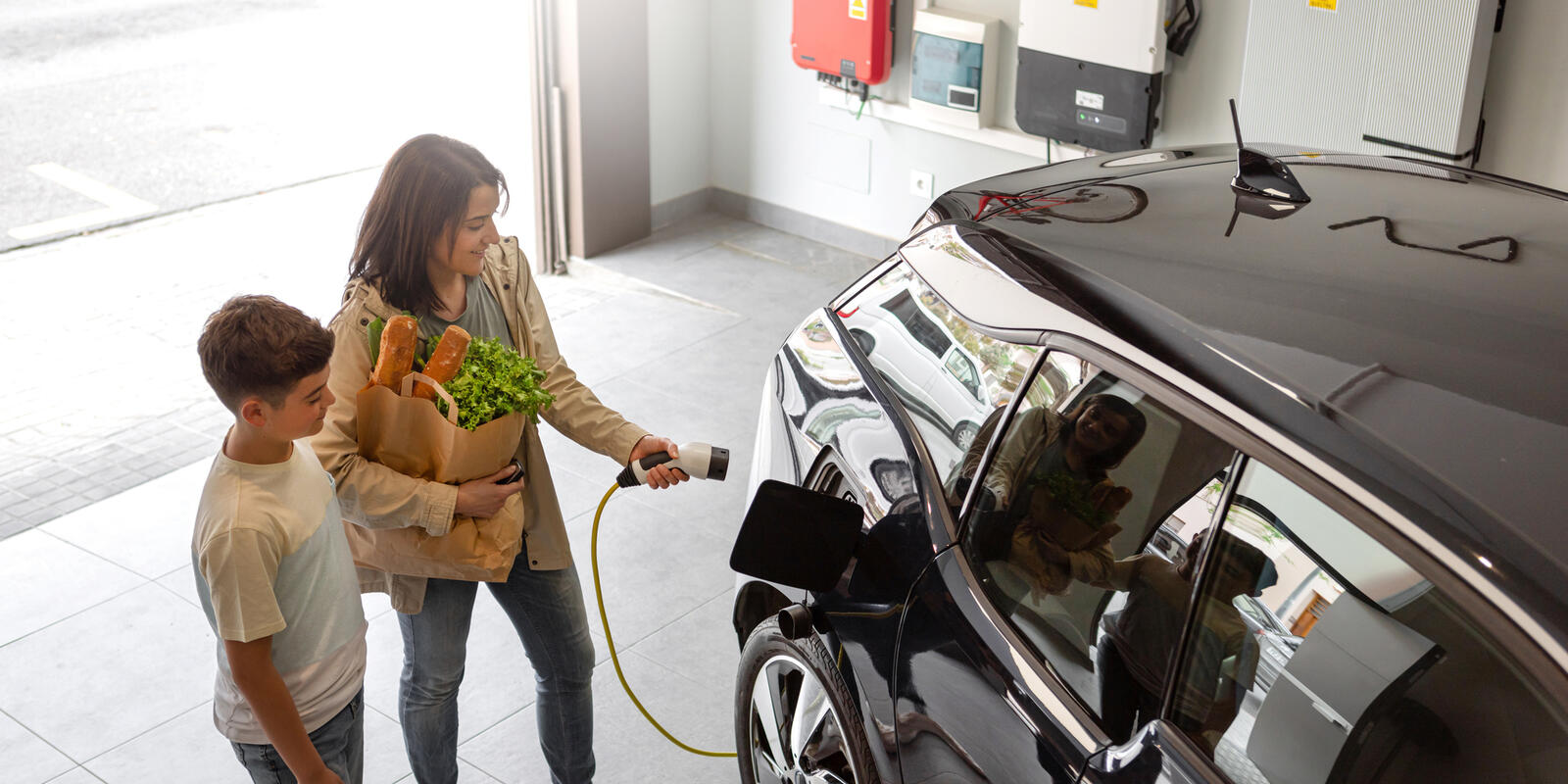
An EV changes how your household uses electricity. A full charge can require a significant amount of electricity, and the timing of that charging (and whether you can schedule it) can make a real difference to which electricity plan works for your situation.
Whether you have a dedicated wall charger or a standard power point, when your car is parked at home and how much charge you typically need each day all make a difference.
Because of this, you may have come across Standing Offer Solar Sharer and wondered whether it could work for your EV. In this guide, we compare it with EV-specific plans designed around overnight charging, like EV Night Boost.
The decision comes down to two things: when your car is actually at home and available to charge, and how the full plan rates stack up for your household.
What is Standing Offer Solar Sharer?
Standing Offer Solar Sharer is a new time-of-use electricity plan that gives eligible households a 3-hour free usage period during the day. During this window, electricity use is not charged, up to a reasonable use cap of 24 kWh per day. This cap is calculated as an average across your billing period rather than a strict daily limit – for example, using 14 kWh one day and 34 kWh the next still averages to 24 kWh per day, so both days remain within the cap. In New South Wales and Queensland, that window runs from 11.00am to 2.00pm. In South Australia, it's 12.00pm to 3.00pm.
It works best when you can shift some of your electricity use – including EV charging – into that window.
Standing Offer Solar Sharer may not suit customers who can't shift their usage into the free usage period. If usage isn't shifted, customers may face higher costs than on other plans. Usage above the reasonable use cap will be charged, and you'll still pay any applicable non-usage charges such as the daily supply charge, charges for usage outside the free usage period, and any applicable controlled load usage charges.
Standing Offer Solar Sharer is a standalone electricity plan, not an add-on. So, if you're on another plan and want to access it, you'll need to actively opt in and switch to it.
Standing Offer Solar Sharer isn't an EV-specific plan. Any eligible residential customer with a smart meter can sign up, with or without an EV or solar panels.
What are EV plans with low-cost charging windows?
Many EV plans are designed around a low-cost charging window, often overnight. These plans suit customers who plug in after work and charge while they sleep, taking advantage of lower rates during off-peak hours.
EV Night Boost is one example of this type of plan. It's an EV plan available in NSW, designed around overnight EV charging.
Whether an overnight charging window suits you depends on your routine: when you drive, when you're home and whether you're usually plugged in overnight.
Daytime EV charging: when Standing Offer Solar Sharer may be worth exploring
For some households, the daytime free usage period may align well with the way you already use your EV. Standing Offer Solar Sharer may be worth understanding if:
- your EV is often parked at home during the daytime free usage period
- you can schedule some charging during the day
- your household can shift some other electricity use into the same window
- you understand the reasonable use cap and how EV charging factors into it
- you're comfortable actively managing your usage
Households that might want to think about this include people who work from home, retirees, households with a second car parked at home during the day, or anyone with a flexible daytime schedule.
That said, Standing Offer Solar Sharer is not an EV-specific plan. The free usage period applies to all household electricity use, not just EV charging, and the reasonable use cap covers everything running during that window, averaged across your billing period.
Overnight EV charging: when an EV plan may be worth understanding
An EV plan with a low-cost overnight charging window may be relevant for customers who:
- mainly charge overnight
- need the car during the day and aren't home with it during daytime hours
- prefer to plug in after work and charge while they sleep
- want a plan designed around EV charging behaviour
EV Night Boost is a NSW EV plan built around this pattern.
If overnight charging is how you naturally use your EV, a plan designed for that routine is worth comparing against a daytime free usage period you may not regularly be home to use.
Can you charge enough during the free usage period?
This is one of the most practical questions EV owners should think through.
The free usage period runs for three hours. How much your EV can charge in that time depends on your car and, more importantly, your charger type.
Standard power point: a standard household power point charges an EV much more slowly than a dedicated wall charger. In a 3-hour window, a standard power point is unlikely to deliver a full charge for most EVs.
Dedicated wall charger: a wall charger charges significantly faster, but the reasonable use cap is still an important factor. EV charging draws a substantial amount of electricity, and if other household appliances are also running during the free usage period, your total usage can reach the cap faster than expected over your billing period. Any usage above the 24kWh daily reasonable use cap, averaged over the billing period, may be charged.
Before assuming the free usage period would cover a full EV charge, it's worth understanding your charger setup and roughly how much electricity your car needs each day.
Standing Offer Solar Sharer and EV Night Boost can't be used together
Standing Offer Solar Sharer is a standalone electricity plan, which means it can't be combined with EV Night Boost or any other standalone plan.
If you’re on EV Night Boost, that means giving up the overnight charging window in favour of the daytime free usage period. Whether that trade-off works for you depends on your usage patterns and rates.
It's worth comparing both plans in full before making the switch.
What EV owners should check before comparing plans
Before comparing Standing Offer Solar Sharer and any EV plan, it helps to have a clear picture of your charging habits and current charges.
Here are the things worth checking:
- Is my EV usually home during the day?
- Do I mainly charge overnight?
- Can I schedule my charging?
- Do I have a dedicated wall charger or a standard power point?
- How much charge do I usually need each day?
- What are the rates outside the charging or free usage period?
- What is the daily supply charge?
- Do I have controlled load or other charges?
- Could EV charging push my household above the reasonable use cap?
- Am I comparing the whole plan, not just one charging window?
What it comes down to for EV owners
The right question for EV owners isn't just "which plan has a charging window?" It's “when is my car actually at home and available to charge?”
Standing Offer Solar Sharer may be worth understanding for eligible households that can regularly shift some EV charging, and other usage, into the daytime free usage period, and that are comfortable managing usage actively within the reasonable use cap.
EV plans with a low-cost overnight charging window, like EV Night Boost, may be worth understanding for customers who mainly charge overnight and want a plan built around that routine.
Before deciding what to explore, compare eligibility, charger setup, when your car is at home, usage rates, the daily supply charge, other charges and the reasonable use cap (24 kWh per day, averaged across your billing period), not just the window on offer.
Thinking about switching to Standing Offer Solar Sharer? Give us a call.
Interested in learning more about EVs and your energy use? Head to our EV page.
In NSW and looking for an EV plan designed around overnight charging? Check out EV Night Boost.